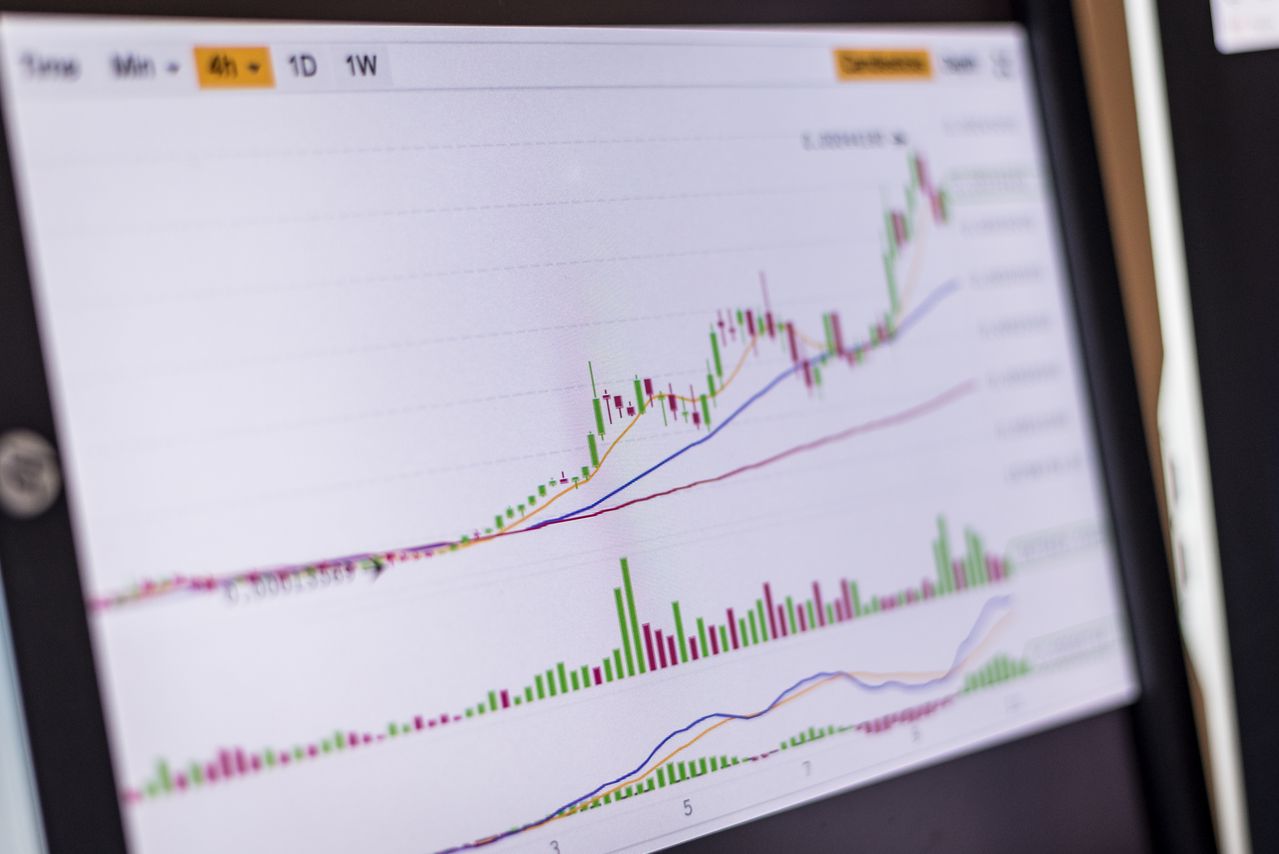
If you’ve spent any time learning about Forex trading, you’ve probably come across the term moving average. It’s one of the most popular technical indicators used by traders around the world, from beginners placing their first trade to experienced professionals managing large portfolios.
But what exactly is a moving average? Why is it so useful? And how can it help you make better trading decisions?
In this beginner-friendly guide, we’ll explain everything you need to know about moving averages, how they work, and how they can be used in simple Forex trading strategies.
What Is a Moving Average?
A moving average (MA) is a technical indicator that calculates the average price of a currency pair over a specific period of time.
Instead of showing every individual price movement, a moving average smooths out the market’s ups and downs, making it much easier to identify the overall direction of the trend.
Think of it like looking at the average temperature over a week rather than every hourly reading. The average gives you a much clearer picture of whether the weather is generally getting warmer or colder.
The same principle applies to Forex prices.
For example:
- A 10-period moving average calculates the average closing price of the last 10 candles.
- A 20-period moving average averages the last 20 candles.
- A 50-period moving average averages the last 50 candles.
As each new candle forms, the oldest price is removed from the calculation and the newest price is added. This causes the average to “move” along the chart—hence the name moving average.
Why Are Moving Averages Useful?
Forex prices rarely move in a straight line.
Instead, they constantly rise and fall as buyers and sellers compete for control.
These short-term fluctuations can make charts look confusing, especially for beginners.
Moving averages help by filtering out much of this market “noise.”
Instead of focusing on every tiny movement, traders can concentrate on the overall trend.
They are useful because they help traders:
- Identify market trends
- Confirm the direction of price movement
- Spot potential entry opportunities
- Find possible exit points
- Identify dynamic areas of support and resistance
- Avoid trading against the prevailing trend
Rather than predicting the future, moving averages help traders understand what the market is already doing.
How Do Moving Averages Work?
Imagine you’re looking at the EUR/USD currency pair.
Suppose the last five closing prices were:
- 1.1000
- 1.1010
- 1.1020
- 1.1030
- 1.1040
A 5-period moving average would simply calculate the average:
(1.1000 + 1.1010 + 1.1020 + 1.1030 + 1.1040) ÷ 5 = 1.1020
When the next candle closes, the oldest value is removed and the newest one is included.
This creates a constantly updating average that follows price across the chart.
Types of Moving Averages
Although there are several types of moving averages, beginners should focus on the two most common.
Simple Moving Average (SMA)
The Simple Moving Average (SMA) gives equal importance to every price in the selected period.
For example, a 20-period SMA treats all 20 closing prices exactly the same.
Because every price carries equal weight, the SMA moves relatively slowly.
Advantages
- Easy to understand
- Produces smooth trend lines
- Helps identify long-term trends
Disadvantages
- Reacts slowly to sudden price changes
- Can produce delayed trading signals
Exponential Moving Average (EMA)
The Exponential Moving Average (EMA) works slightly differently.
Instead of treating every price equally, it gives greater importance to the most recent prices.
This makes the EMA more responsive to changing market conditions.
Advantages
- Reacts faster to price movement
- Generates earlier trading signals
- Popular among short-term traders
Disadvantages
- More sensitive to market noise
- Can produce more false signals during sideways markets
Choosing the Right Moving Average
There is no single “best” moving average.
Different traders use different periods depending on their trading style.
Here are some commonly used settings:
| Moving Average | Common Use |
|---|---|
| 5 EMA | Very short-term trading |
| 10 EMA | Intraday trading |
| 20 EMA | Swing trading |
| 50 SMA | Medium-term trend |
| 100 SMA | Longer-term trend |
| 200 SMA | Major long-term trend |
As a general rule:
- Shorter moving averages react faster.
- Longer moving averages are smoother but slower.
How Traders Use Moving Averages
There are several ways moving averages can be used in Forex trading.
1. Identifying the Trend
This is the most common use.
If price is consistently above the moving average, the market is generally considered to be in an uptrend.
If price remains below the moving average, the market is generally considered to be in a downtrend.
Many traders avoid buying when price is below a major moving average and avoid selling when price is above it.
2. Dynamic Support and Resistance
Unlike traditional support and resistance levels, moving averages are constantly changing.
Price often pulls back towards a moving average before continuing in the direction of the trend.
For example:
- During an uptrend, price may fall back to the 20 EMA before rising again.
- During a downtrend, price may rally towards the moving average before falling again.
Because the average moves with price, traders often refer to this as dynamic support or resistance.
3. Moving Average Crossovers
One of the most popular beginner strategies involves using two moving averages.
For example:
- 20 EMA
- 50 EMA
Bullish crossover
When the shorter moving average crosses above the longer moving average, it may indicate increasing buying momentum.
This is often called a Golden Cross when referring to longer-term averages (such as the 50-day crossing above the 200-day moving average).
Bearish crossover
When the shorter moving average crosses below the longer moving average, it may suggest growing selling pressure.
A longer-term bearish crossover (such as the 50-day moving below the 200-day moving average) is often called a Death Cross.
Crossovers can be useful, but they should not be used in isolation because they often occur after the trend has already begun.
4. Confirming Trade Setups
Many traders combine moving averages with other forms of analysis.
For example:
When several indicators point in the same direction, traders often have greater confidence in their decisions.
A Simple Beginner Strategy
One straightforward approach is to use a single 50-period EMA.
Buy Setup
- Price is above the 50 EMA.
- The moving average is sloping upwards.
- Price pulls back towards the EMA.
- A bullish candlestick pattern appears.
- Consider a buy trade.
Sell Setup
- Price is below the 50 EMA.
- The EMA slopes downwards.
- Price rallies back towards the EMA.
- A bearish candlestick pattern appears.
- Consider a sell trade.
This simple strategy encourages traders to follow the trend rather than trying to predict market reversals.
The Advantages of Moving Averages
Moving averages remain popular because they offer several benefits:
- Easy to understand
- Suitable for beginners
- Help identify trends quickly
- Reduce chart noise
- Work across all currency pairs
- Can be used on any timeframe
- Combine well with other indicators
- Help traders stay disciplined by following objective rules
The Limitations of Moving Averages
Despite their usefulness, moving averages are not perfect.
One important limitation is that they are lagging indicators.
Because they are based on past prices, they react after the market has already moved.
Other limitations include:
- Delayed entry signals
- False signals during sideways or ranging markets
- Whipsaws, where price repeatedly crosses the moving average without establishing a clear trend
- They cannot predict future price movements
For these reasons, many experienced traders use moving averages as one tool within a broader trading strategy rather than relying on them alone.
Tips for Beginners
If you’re new to Forex trading, keep these tips in mind:
- Start with one or two moving averages rather than cluttering your chart.
- Focus on identifying the overall trend before looking for trade entries.
- Practice using moving averages on a demo account before risking real money.
- Combine moving averages with price action and support and resistance analysis.
- Remember that no indicator is accurate 100% of the time.
Patience and consistency are often more valuable than trying to find a “perfect” indicator.
Conclusion
Moving averages are among the simplest yet most effective tools available to Forex traders. By smoothing out price fluctuations, they make it easier to recognise trends, identify potential trading opportunities, and avoid many of the distractions caused by short-term market noise.
For beginners, moving averages provide an excellent introduction to technical analysis because they are easy to understand and apply. Whether you’re using a single moving average to identify the trend or combining two moving averages to look for crossover signals, they can help bring structure and discipline to your trading decisions.
However, it’s important to remember that moving averages are not predictive tools. They are designed to reflect what the market has already been doing rather than forecast what will happen next. Used alongside sound risk management and other forms of technical analysis, moving averages can become a valuable part of a well-rounded Forex trading strategy.
Related Posts